Tides in Pornichet
Twice a day, the sea slowly retreats from Pornichet’s beaches, only to return and cover the warm sand once again. This endless movement shapes the coastline, transforms the landscape and has set the rhythm of life in the Atlantic seaside town for generations. It is something you grow used to, yet never tire of. Understanding the tides means unlocking a new way to understand the coast itself — and learning how to shape your day around the rhythm of the Atlantic.
Why the sea rises and falls in Pornichet
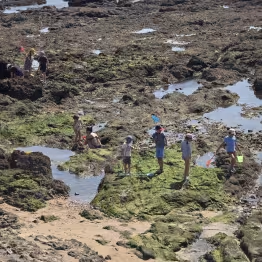
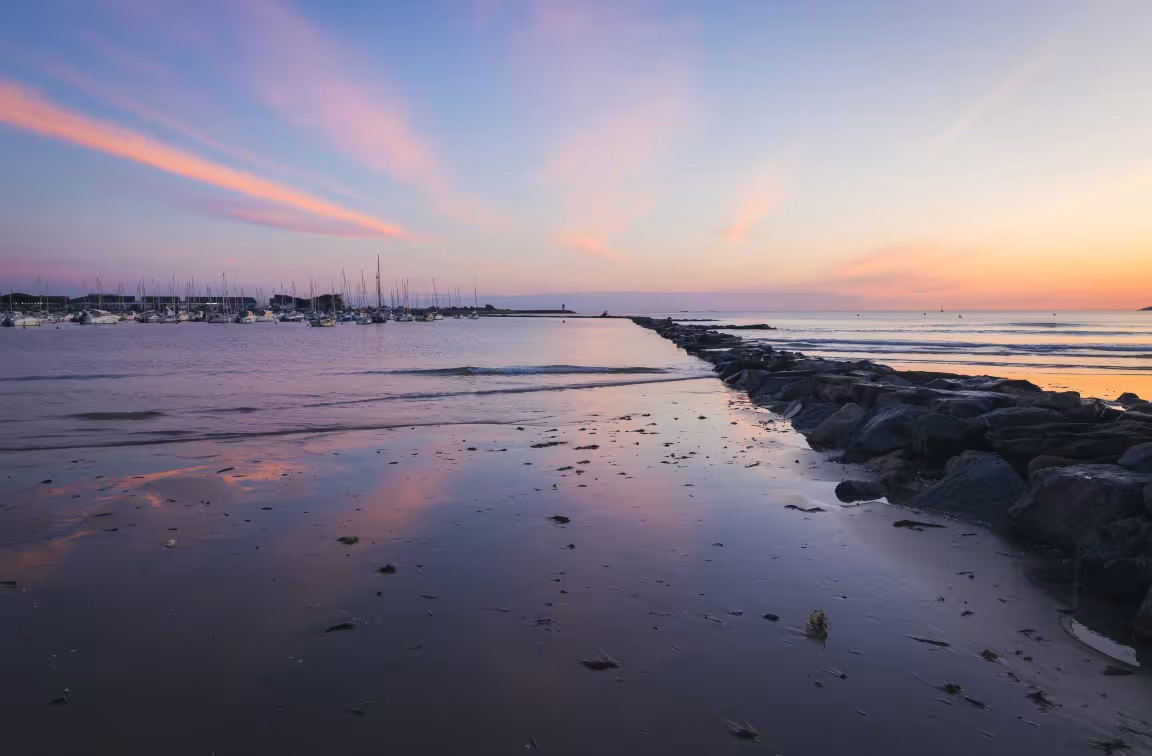
On Plage de Bonne Source in the early morning, when the tide is low, the sand stretches so far it almost feels possible to walk straight toward the horizon. Children run with buckets in hand. Shore fishers bend over the rocks newly exposed by the retreating sea. Then the water returns — slowly at first, faster as the hours pass — and the beach becomes something entirely new.
This constant movement is the tide. The Moon is its main driver. Its gravitational pull, combined with that of the Sun, causes the ocean level to rise and fall. Along our Atlantic coastline, four tidal movements occur each day: two high tides and two low tides. The water rises for roughly six hours, then recedes over the next six. It is the most visible expression of the Moon’s influence on Earth, and thanks to celestial mechanics, one of the most precisely predictable natural phenomena.
From one day to the next, tide times shift by roughly fifty minutes because the lunar day lasts slightly longer than the solar day. This regular delay means that around four times per month, there are only three tides in a day instead of four. Across Pornichet’s three beaches, the scenery changes hour by hour, day by day.
From one day to the next, tide times shift by roughly fifty minutes because the lunar day lasts slightly longer than the solar day. This regular delay means that around four times per month, there are only three tides in a day instead of four. Across Pornichet’s three beaches, the scenery changes hour by hour, day by day.
Tidal coefficients and spring tides: understanding the coastal calendar
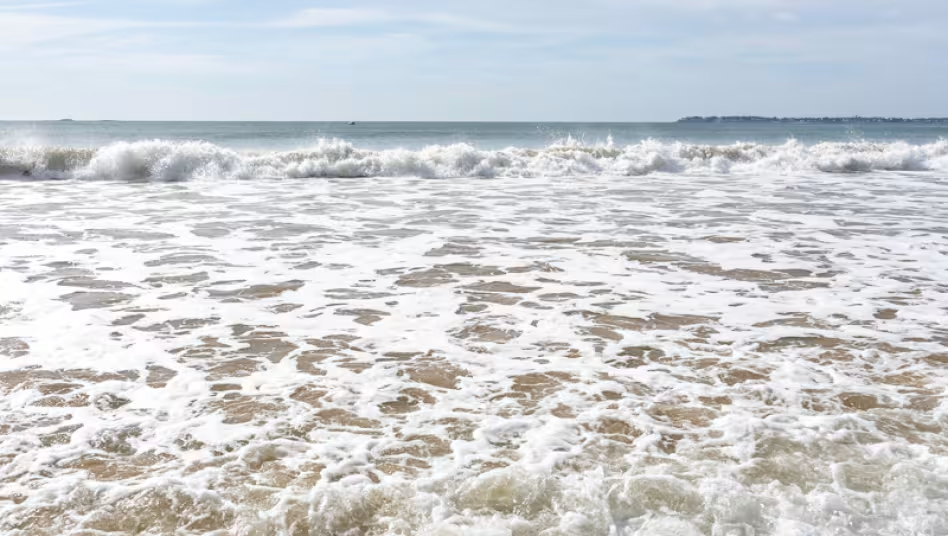
No two tides are ever quite the same. During certain weeks, the sea rises and falls gently: these are neap tides, when the Sun and Moon pull in opposing directions during the first or last quarter moon. Other weeks, the ocean seems to breathe deeply: these are spring tides, when both celestial bodies align their forces during the full moon or new moon.
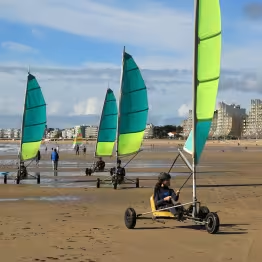
To measure the intensity of these movements, France uses a unique indicator: the tidal coefficient, calculated by the French Hydrographic Office (SHOM) based on the port of Brest. The scale ranges from 20 (minimal neap tide) to 120 (exceptional equinox tide). Above 70, tides are considered moderate. Above 100, they are classified as major spring tides. During these moments, the foreshore stretches dramatically outward, creating vast playgrounds for shore fishing and land sailing.
The strongest tides occur during the equinoxes in March and September, when the Sun further amplifies its influence. Roughly every four years, these equinox tides reach particularly spectacular levels. In Pornichet, these days completely transform the coastline: the sea retreats far beyond its usual limits, exposing areas normally submerged, before surging back with remarkable force. Spring tides are always fascinating to witness, but caution and respect for safety advice remain essential.
Checking tide schedules before every outing at sea
The sea does not rise at a constant speed. Its movement is irregular, accelerating significantly halfway through the tidal cycle. In general, the water rises faster than it falls. It is an important detail: without checking the tide schedule, it is surprisingly easy to be caught off guard by rapidly incoming water.
Before swimming, kayaking or exploring the foreshore at low tide, the first habit to adopt is checking Pornichet’s tide timetable. Astronomical tide predictions are extremely reliable because they are based on the precise mechanics of celestial bodies. Weather conditions, however, can change the situation: strong winds or low atmospheric pressure may push water levels higher than expected. Checking weather conditions alongside tide forecasts is always recommended.
A few nautical terms naturally accompany this daily ritual. When the tide rises, it is called the flood tide. When it retreats, it becomes the ebb tide. The moment when the water seems perfectly still, neither rising nor falling, is called slack water. And the stretch of coastline revealed between high and low tide is known as the foreshore — one of Pornichet locals’ favourite playgrounds.
Activities to enjoy depending on the tides
The tides create a constantly shifting range of experiences throughout the day. At low tide, Bonne Source’s foreshore becomes the perfect setting for family shore fishing. When tidal coefficients rise, land sailing enthusiasts race across the compact sand of Plage des Libraires.
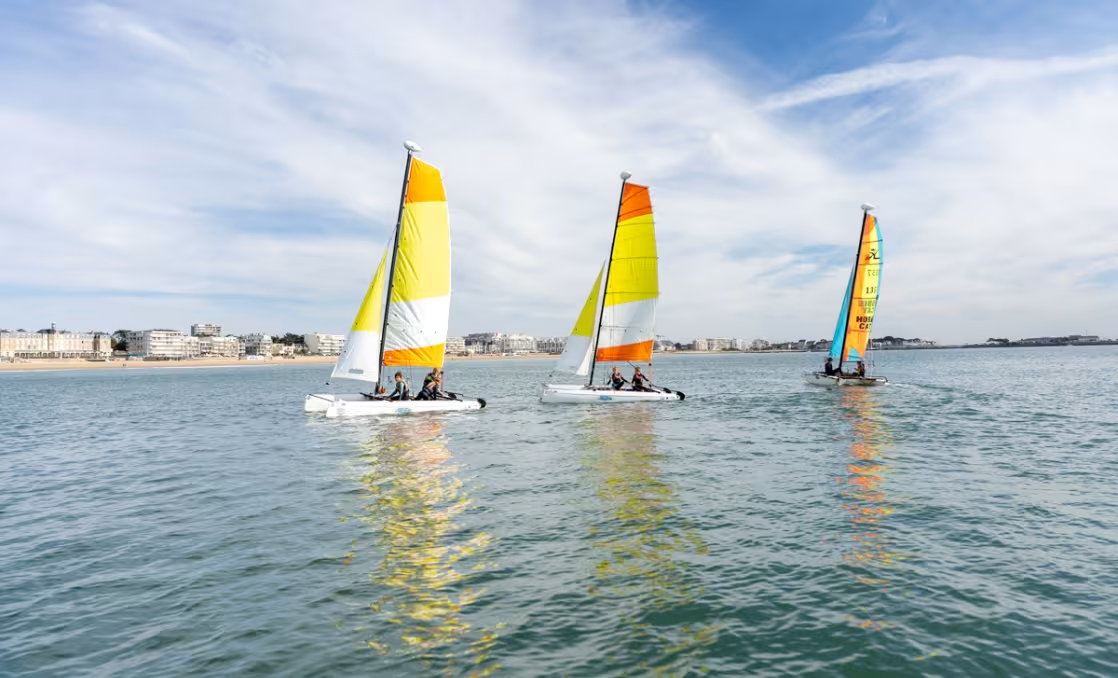
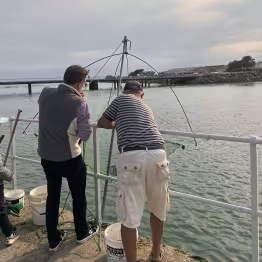
At high tide, watersports take over: paddleboarding, wing foiling, kayaking and sailing. The ocean reveals itself in every form, always at your own pace. And for fishing enthusiasts, once the rocks disappear beneath the water, the focus shifts to traditional square-net fishing from the pier.