
The Belle Époque in Pornichet: the print of a golden age
More than a century ago, between the Atlantic and the pines, Pornichet was transformed by an era driven by progress and effortless elegance. The Belle Époque left far more than a memory here: villas with richly detailed façades, a culture of wellbeing born on the shoreline, and a seaside art of living still savoured today while strolling along the seafront. Follow the thread of time, from the arrival of the railway to the early years of the 20th century.

The Belle Époque on the coast: a breath of renewal
The Belle Époque. The term appeared after the First World War, born of nostalgia. It refers to the period from 1871 to 1914, when France and Europe experienced forty years of peace, scientific progress and cultural effervescence. Cinema emerged with the Lumière brothers in 1895, Impressionism reinvented the way people saw the world, and Parisian cabarets drew the crowds. It was a time for invention, creation and daring.
On the Atlantic coast, this energy took on a distinctive form. The railway, which arrived in Pornichet in 1879, opened the way to the ocean for families from Paris, Nantes and the Loire region. In just a few hours, they could leave the boulevards behind for the shoreline. Seaside holidays began to flourish: people came to breathe the salty sea air, walk beside the waves and enjoy a quality of life the city could not offer. Pornichet became a place to savour every moment, where the pace slowed down with the tides. It was the beginning of a story still being written.


Belle Époque villas facing the Atlantic
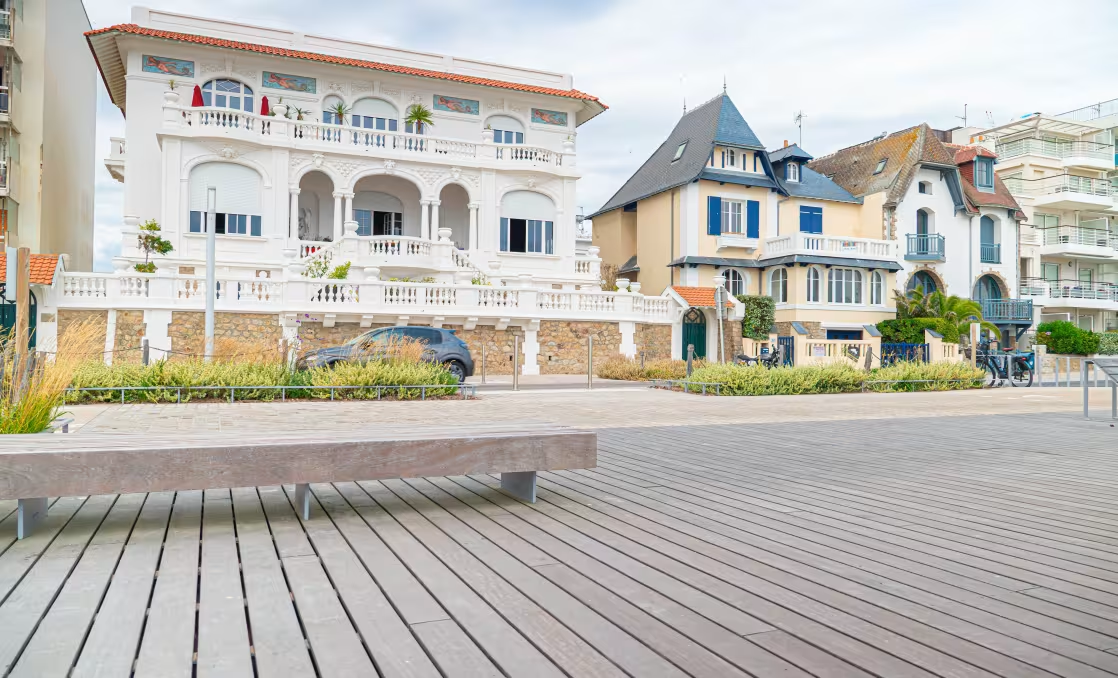
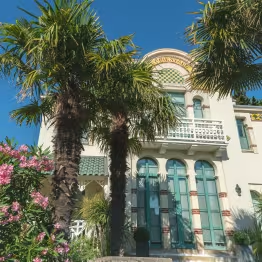
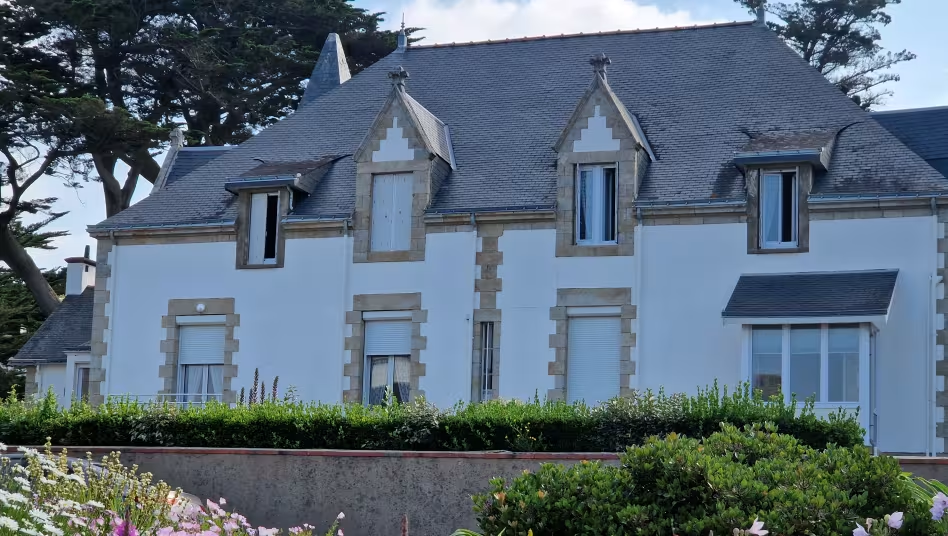
The first holidaymakers did not simply come to stay. They built. Facing the ocean, villas rose with turrets, bow windows opening out towards the sea, sculpted friezes and finials shaping the silhouette of the seafront. The architecture blended Art Nouveau influences with seaside style: granite, brick, carved wood and ornamental balconies.
Among the dignitaries who shaped this transformation, Charles Mercier, the Parisian lawyer who became Pornichet’s first mayor in 1900, played a founding role. As early as 1886, he created the Sainte-Marguerite district. Around the same time, celebrities such as Sarah Bernhardt stayed in Sainte-Marguerite, Maxime Boucheron co-founded the Grand Hôtel de l’Océan in 1882, and Ernest Merson, a friend of Jules Verne, settled at Villa Les Algues. Pornichet became a sought-after seaside resort, where literary and artistic figures could often be seen.
In 1912, Pornichet’s coat of arms sealed this emerging identity: two heraldic dolphins, the Pierre Percée, a maritime pine and finials nodding to the villas lining the coast. To admire these façades up close, Pornichet’s Belle Époque villas reveal themselves along a walk between the town’s neighbourhoods.



Sea bathing at the origins of thalassotherapy
The story began in 1881, on Plage des Libraires. Monsignor Le Coq, Bishop of Nantes, bought Villa Preciosa, built directly on the sand at a time when the seafront boulevard did not yet exist. He entrusted the villa to the Congrégation des Oblates du Sacré Coeur, led by Mother Sophie Gazeau de la Brandanière. Suffering from rheumatism, she noticed that seawater brought her relief. In 1884, she had small roofless wooden cabins built in front of the villa. The nuns heated seawater and poured it over residents seated in these rudimentary cabins. Thalassotherapy was born in Pornichet.
The practice stopped in 1902, but the idea endured. In 1922, Pornichet was classified as a health resort for the benefits of its salty sea air and sea bathing. The Hôtel des Bains housed the first treatment establishment, then the Thermes des Océanides opened in 1934, offering hot and cold seawater baths. In the 1950s, an outdoor heated seawater pool completed the seawater therapy offer.
The story of thalassotherapy continues today in Pornichet with modern centres like the Château des Tourelles site, direct heirs to those wooden cabins on the beach.

Guided tours: relive that period in Pornichet
To experience the atmosphere of the Belle Époque beyond the pages of a book, Pornichet offers guided tours that immerse visitors in the era. “The Belle Époque in 60 Minutes” traces the highlights of the period through the town’s avenues and emblematic façades. “The Incredible Story of Sea Bathing” explores the customs and practices of sea bathing, often wonderfully eccentric, from its origins to the 1920s. “Journey Through Time” invites visitors on a walk through the ages, from the village’s beginnings to today’s Atlantic seaside town.