Brière: a world of water and quiet just beyond Pornichet
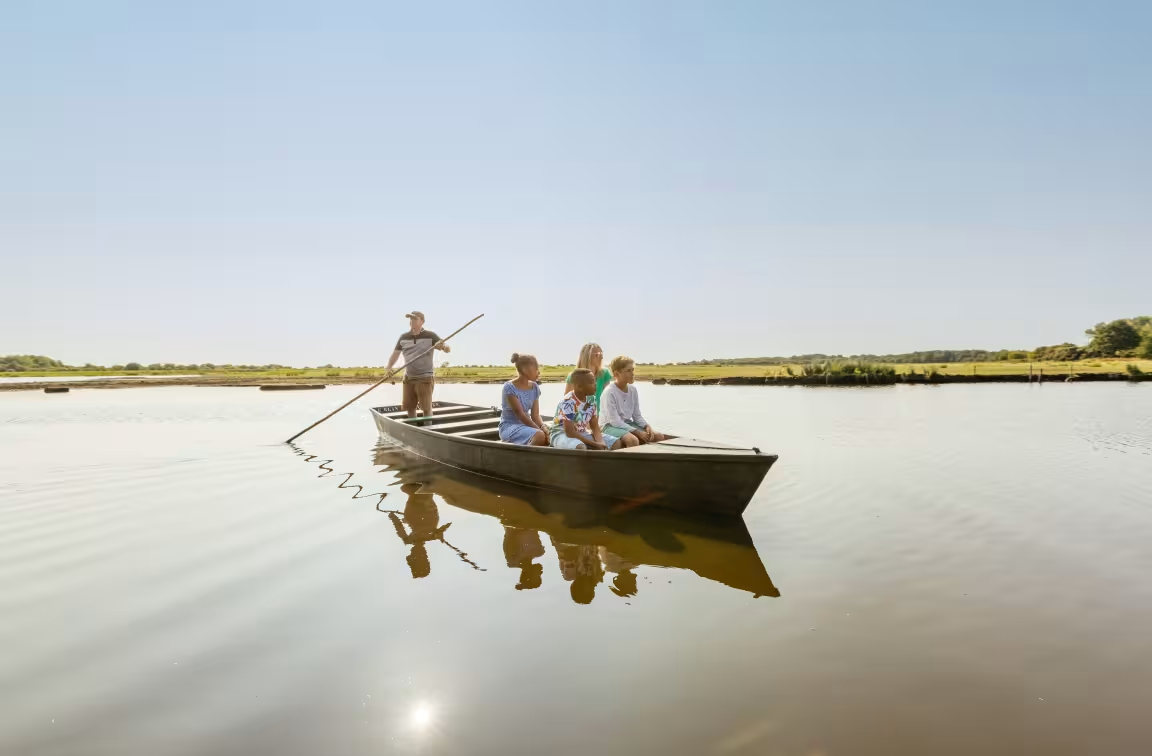
Water gently laps against the hull of the chaland. The reeds barely bend, the wind brushes the canal without disturbing its surface. You drift, you observe, you listen. This is how Brière reveals itself — quietly — to those willing to take their time. From Pornichet, only a few kilometres separate you from this vast wetland landscape where the eye travels all the way to the horizon, interrupted only by a distant church steeple or the silhouette of the Saint-Nazaire Bridge.
Brière, the second largest wetland in France
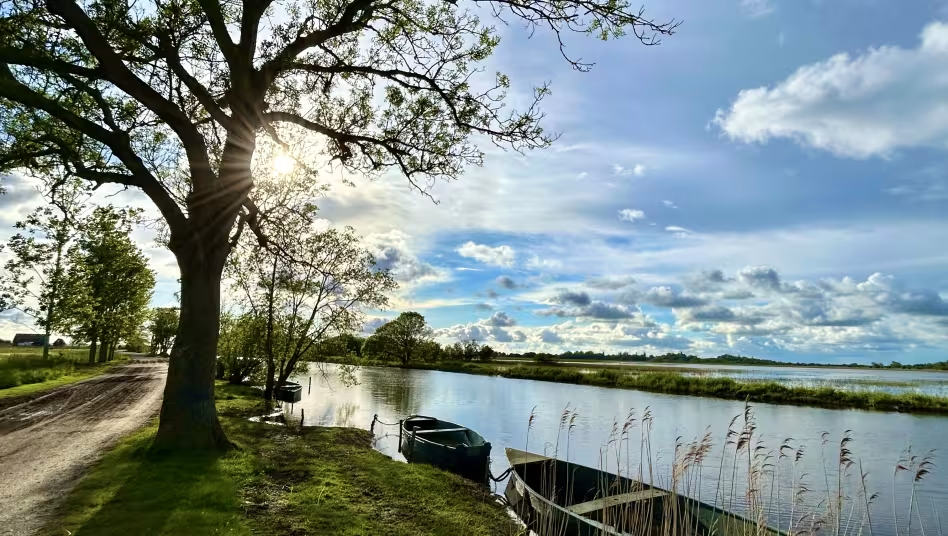
You discover it first through its waterways. Dozens of kilometres of canals weave through this immense landscape of marshland and hedgerow countryside, stretching across more than 50,000 hectares on the doorstep of Pornichet and Saint-Nazaire. La Grande Brière is France’s second largest wetland, a remarkable ecosystem where more than 3,350 plant and animal species have been identified.
The landscape feels like a world apart, despite being only minutes from the coast. The horizon seems endless, while colours shift constantly with the seasons: soft greens in spring when flooded meadows reflect the sky, warm ochres and russet tones in autumn as the reeds begin to dry. Thousands of migratory birds stop here every year. Grey herons, egrets and wild ducks are easily spotted, while the more attentive may hear the song of the white-spotted bluethroat, a discreet little bird that has made these wetlands its refuge.
Yet this landscape is not purely wild. It has been shaped by human hands over centuries. The people of Brière dug canals, maintained meadows and built villages on the small islands of dry land rising from the marshes. In fact, nearly half of the municipality of Saint-Nazaire itself is covered by wetlands and bocage countryside — proof that Brière begins almost immediately beyond Pornichet.
Exploring Brière from Pornichet: routes and experiences
The chaland, a traditional flat-bottomed boat, remains the most immersive way to discover Brière. It was once the everyday means of transport for local inhabitants, often the only way to move between islands and villages when paths disappeared beneath the water. Today, visitors board guided boat trips through the canals, accompanied by local boatmen who know every bend, nesting area and place name by heart.
Several operators offer chaland excursions, with tickets available through Pornichet Tourist Office. Experiences vary: discovering the marshes, wildlife observation, or routes connecting traditional Briéron villages. Each outing offers a different perspective on the same water-shaped landscape.
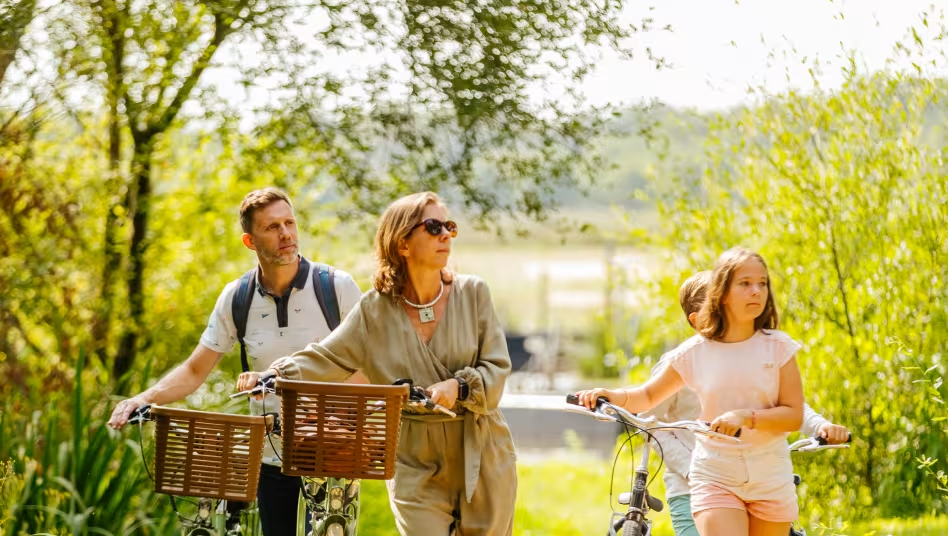
For those who prefer dry land, hiking routes cross directly through the marshlands. The Tour de Brière route and the Marshes and Hedgerows trail follow canals and cut across the surrounding countryside on foot. By bike, routes such as The Islands of Brière and The Charms of Brière tours connect villages and scenic viewpoints overlooking the wetlands, always at the kind of pace this landscape naturally encourages. The From Brière to the Ocean cycling and walking map is available free of charge at the Tourist Office.
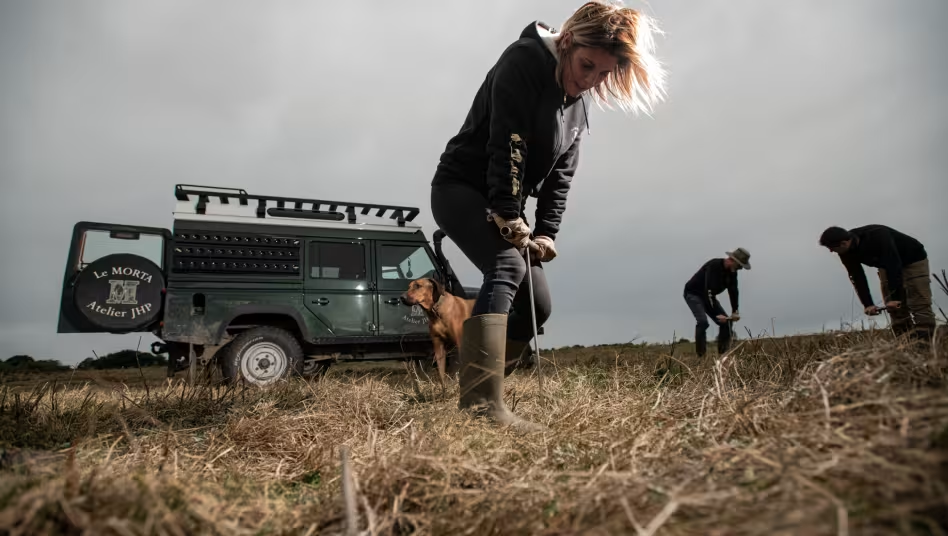
A stop is also worth making at the Morta Knife Workshop. Morta is fossilised oak wood extracted from Brière’s peat bogs, dark as ebony after spending thousands of years submerged underwater. A local craftsman transforms it into beautifully unique knives with dark veined handles, each piece quietly telling the geological story of these wetlands. The Tourist Office also offers guided visits to the workshop.
Discover this protected natural park
Pornichet Tourist Office offers ticketing for several activities and experiences in Brière.
In Saint-André-des-Eaux, at the port de la Chaussée Neuve, you can discover the Brière in the silence of the water and the reeds. By boat or horse-drawn carriage, Jean-Sébastien Crusson shares his experience of the marsh, which he has been passing on for…
In the heart of the Parc Naturel Régional de Brière, around 20 km from Pornichet, Anthony Mahé reveals the Brière in all its glory. Take a barge and glide along the canals to observe a living, vast and silent marsh.
In the heart of the Parc Naturel Régional de Brière, we glide gently through a timeless landscape. At Port de Bréca, L'Arche Briéronne invites you to discover the marsh to the rhythm of water and horse.
In the heart of the Brière Regional Nature Park, the marsh can be explored along waterways and paths. From the port of Bréca, La Faune Briéronne invites you to explore the Brière by barge or horse-drawn carriage.
In the heart of the Brière Regional Nature Park, in Saint-André-des-Eaux, just a few minutes from Pornichet, the Couteaux Morta workshop opens the doors to a rare artisanal know-how deeply rooted in the region.